Free delivery from 74,25 €

Synthetic fly tying dubbing materials

( number of products: 154 )

Synthetic dubbing is a fly tying material made from fibres with different structure and reflectivity.
It allows you to create fly bodies, heads and trigger points that increase effectiveness.
Used in nymphs, streamers, saltwater flies and many modern patterns.

Why is synthetic dubbing so effective?

Synthetic dubbing offers a wide range of textures and effects in the water – from subtle and matte to highly reflective. This makes it easy to match the material to specific conditions and the type of fly you want to tie.

Compared to natural materials, synthetic fibres are more durable, better withstand contact with fish teeth, retain volume and reflect light more effectively. As a result, flies tied with synthetic dubbing are often more visible and perform better in a variety of conditions.

Synthetic dubbing also allows you to achieve strong colours and UV effects, which can significantly increase the effectiveness of your flies.

Types of synthetic dubbing

Synthetic dubbing can be divided into several main groups, depending on fibre structure, length and final effect.

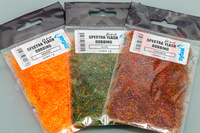
  • flash dubbing (e.g. Ice Dub, Spectra) – available in many versions including UV and UVR, very popular and widely used
  • matte dubbing (e.g. SLF) – more natural look while keeping the advantages of synthetic materials
  • long fibre dubbing – used in streamers and larger flies
  • blended dubbing – combining fibres with different properties, used in many fly patterns

The right choice depends on hook size, fly type and the effect you want to achieve in the water.

Application and selection of synthetic dubbing

Synthetic dubbing is used across a wide range of flies – from small nymphs to large streamers and saltwater flies. In nymphs, finer materials or blends with flash are often used as trigger elements.

In streamers and pike flies, longer fibres are commonly used to build heads and increase the overall volume of the fly.

If you are looking for specific effects, it is worth combining synthetic dubbing with other materials available in the fly tying dubbing category to achieve the desired result in a given pattern.

Properties of synthetic dubbing

Synthetic dubbing differs in fibre length, density and level of reflectivity. These parameters directly affect the look and behaviour of the fly in the water.

Short fibres allow you to create slim and tight fly bodies, while longer fibres produce more bulky and expressive patterns.

Depending on the material, dubbing can be matte or highly reflective, allowing you to adjust the fly to water clarity and fish activity.

Synthetic materials are also durable and resistant to heavy use.

pixel