
Rubber & Silicone Legs for Fly Tying
( number of products: 7 )Rubber and silicone legs are stretchy materials used for the legs of artificial flies. They are mostly used on foam flies such as hoppers and beetles, and on saltwater shrimp patterns.

Troutline Jelly Juicy Legs
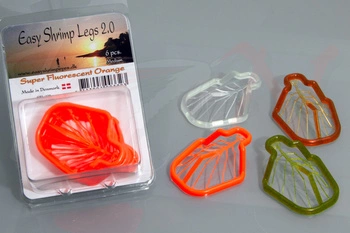
Easy Shrimp Legs 2.0

FF Round Rubber Legs

Hends Flexi Floss

Hareline Chicone's Regular Crusher Legs - Brown Barred Clear

Hareline Crazy Legs - Med Olive/Purple Red Green Flake

Hareline Silicone Flutter Legs
What are rubber and silicone legs used for?
Rubber and silicone legs make the legs of artificial flies – most often on foam flies such as hoppers, beetles and the Chernobyl Ant, and on saltwater shrimp patterns. The soft strands kick with every movement of the fly and on every pause, which often triggers a take.
Types of rubber and silicone legs
- Silicone legs in bundles – soft strands about 14–15 cm long, plain, barred, with flake or translucent. They are used mainly on foam flies.
- Round fluo rubber legs – bright legs for foam flies and shrimp patterns for sea trout.
- Flexi Floss – a flat, very stretchy band for legs on foam flies and nymphs, and for buzzer bodies and ribbing.
- Ready-made shrimp legs – a pre-formed set of legs tied onto the shank with a few turns of thread. For shrimp patterns for sea trout, cod and bonefish.
How to choose legs for your fly
For hoppers, beetles and other foam flies, choose silicone legs in natural colours, plain or barred – or legs with flake when the fly needs more sparkle. On saltwater shrimp patterns, ready-made legs are the quickest option.
Bright fluo colours make the fly easier to see in coloured water and on sea trout flies fished in cold water. Translucent legs give a more natural look in clear water.
How to tie in silicone legs
Lay the legs against the shank and secure them with a few turns of thread – on foam flies, usually at the foam tie-down point. Once they are secure, trim the ends to length.
Thin thread pulled tight too quickly can cut the silicone, so tighten it gently – ideally use a flat, heavier thread such as 140 denier or 6/0. Legs can also be pulled through the foam with a threader, although this is rarely done – with this method, add a drop of glue so the legs do not slip out.
Frequently asked questions
Can silicone legs be coloured?
Yes, with waterproof markers. This way you can turn plain legs into barred legs for different imitations.
What is the difference between ready-made shrimp legs and single rubber legs?
Ready-made realistic legs are a pre-formed set that you tie onto the shank in about ten to fifteen seconds. With single rubber legs, each leg has to be tied in separately, but you can choose their number and length freely.
What is the difference between silicone legs and Flexi Floss?
Silicone legs are thicker and soft, and come in ready-made bundles. Flexi Floss is a thin, flat band on a spool – it stretches more, and you cut off just as much as you need.