Latex & Stretch Body Materials for Nymphs and Larvae
( number of products: 18 )Latex and stretch body materials are wrapped around the hook shank to make segmented, often translucent bodies on nymphs and larvae. They are used for midge and caddis larva imitations, large nymphs, lake flies and wet flies.

Sybai Wiggly Worms Black

Sybai Wiggly Worms Fiery Brown

Sybai Wiggly Worms Pink

Sybai Wiggly Worms Light Pink

Sybai Wiggly Worms Bloodworm

Sybai Wiggly Worms Red

Sybai Wiggly Worms Transparent
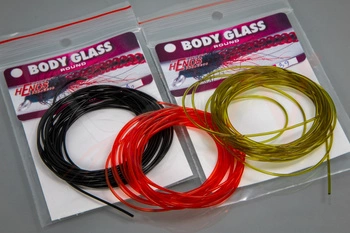
Hends Body Glass Round

Hends Body Glass Half Round

Hends Flexi Floss

Hends Body Glass Extrafine 0.5mm BGE22 Rusty Brown

Hends Body Glass Extrafine 0.5mm BGE14 Brown Dark

Hends Body Glass Extrafine 0.5mm BGE35 Dark Olive

Hends Body Glass Extrafine 0.5mm BGE39 Olive Light

Hends Body Glass Extrafine 0.5mm

Hends Body Glass Extrafine 0.5mm BGE01 Transparent
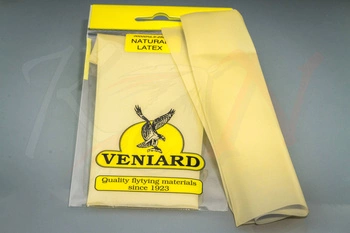
Veniard Natural Latex sheet

Hareline Kiley's Nymph Skins
What are latex and stretch body materials used for?
Stretch materials are wrapped around the hook shank to form clear segments, and translucent materials let the underbody colour show through – this is how realistic larva, pupa and nymph bodies are made. Some of them can also be used as a rib or a shell back on a nymph.
Types of stretch body materials
- Body Glass and similar stretch materials – for segmented bodies on midge larvae, larger nymphs and lake flies. Thinner versions also make a good rib.
- Catgut – a material that turns milky and translucent when wet, for bodies on nymphs and pupae.
- Latex strips and sheets – natural stretch latex, used among others for caddis (sedge) pupa imitations.
- Soft stretch film – translucent, stretchy film in 10 mm strips for bodies and shell backs on large nymphs.
How to choose a stretch material for your fly
For small larvae and nymphs, choose the thinnest stretch materials or catgut – they suit hooks #14–#16. For larger nymphs, caddis larvae and lake flies, thicker Body Glass or latex strips work better.
The underbody sets the body colour. Wrap coloured thread or bright floss under clear latex, catgut or film – it will show through on the finished fly.
How to wrap latex and stretch materials
Tie the material in at the back of the shank and wrap it in touching turns towards the hook eye. Tension controls thickness and translucency: stretch it more at the tail and less near the eye, and the body naturally gets thicker towards the front.
Latex sheet is best cut with sharp scissors. When wrapping latex, let each turn slightly overlap the previous one to keep the segments clearly defined.
Frequently asked questions
Does a stretch body need protecting?
No. Body Glass bodies are very durable and last for many fish.
Are stretch materials suitable for jig nymphs?
Yes. Translucent, segmented bodies work well on classic nymphs, jig nymphs and lake flies.
Latex sheet or ready-cut strips?
You can cut a sheet into strips of any width to match the size of the fly. Ready-cut strips have a fixed 4 mm width and save time at the vice.