Synthetic Tails for Dry Flies
( number of products: 3 )Dry fly tails are very fine synthetic fibres used for the tails of mayflies and other dry flies. They are more durable than hackle fibres and help the fly float.
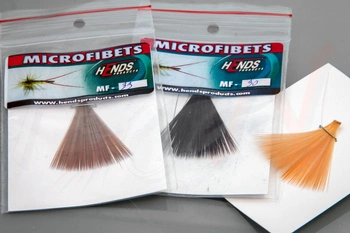
Hends Microfibets

Hareline Mayfly Tail
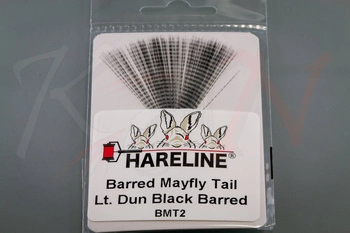
Hareline Barred Mayfly Tail - Light Dun Black Barred
What are dry fly tails used for?
Synthetic tails, also known as Microfibbets, are very fine fibres with a tapered tip. They are used for the tails of dry flies, above all mayfly imitations – duns, spinners and spent patterns. The tail supports the back of the fly on the water, so it sits in a natural position.
Tail colours
- Plain Microfibbets – fibres about 3–4 cm long in natural colours: yellow, olive, tan, dun, brown and black.
- Barred Microfibbets – fibres with dark bars that imitate the banded tails of natural mayflies.
How to choose tails for your fly
Match the tail colour to the mayfly you imitate – light shades for pale species, olive and brown for darker ones. As a rule, the tail is about as long as the hook – natural mayflies have even longer tails. For these patterns you will also need light dry fly hooks.
How to tie a Microfibbet tail
Tie the fibres in at the rear of the shank with a few turns of thread. Set the tail length as you tie them in – at this stage you can still adjust it. Do not trim the tapered tips, as they give the tail its natural look.
Frequently asked questions
How many fibres should I use for a tail?
Natural mayflies have two or three tails, so 2–3 fibres are most common.
What is the difference between Microfibbets and hackle fibres?
Hackle fibres, e.g. Coq de Leon, are natural and you need more of them. Synthetic Microfibbets are stiffer and more durable and help the dry fly float.